
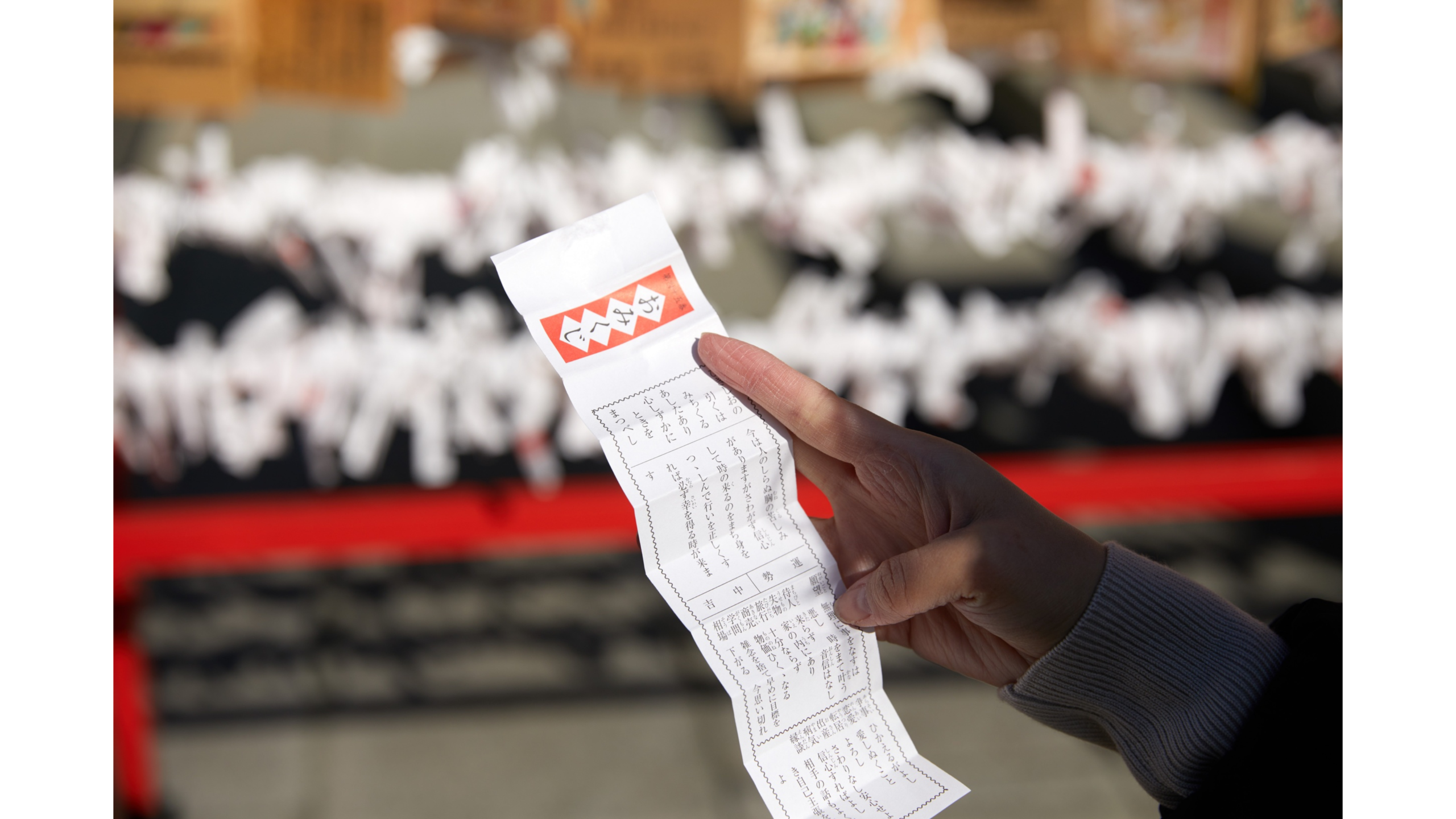
What Is Omikuji? A Simple Guide to Japan’s Fortune-Telling Paper
If you visit a shrine or temple in Japan, you may notice rows of small paper slips tied neatly to racks, gently moving in the wind.
These are omikuji—traditional fortune papers that reveal your luck and offer guidance for the future.
It’s a simple experience.
But like many things in Japan, it carries a quiet depth.
What Is Omikuji?
Omikuji are paper fortunes drawn at shrines and temples across Japan.
The word means “sacred lot,” referring to a random fortune you receive as a form of guidance.
Each omikuji contains predictions or advice about areas such as:
- Love
- Health
- Travel
- Work or studies
It’s not about predicting the future with certainty—
but about reflecting on where you are now.
A Tradition Rooted in Everyday Life
Omikuji has origins in both Shinto and Buddhism.
What makes it unique is how naturally it blends into daily life.
People draw omikuji:
- At the start of a new year
- During important life moments
- Or simply while visiting a shrine
It’s not a rare ritual—it’s something quietly familiar.
How to Draw Omikuji
Trying omikuji is simple, even if it’s your first time.
Step 1: Make a Small Offering
Place a coin (usually around ¥100) as a sign of respect.
Step 2: Draw Your Fortune
Depending on the shrine, you may:
- Shake a box and draw a numbered stick
- Pick a slip directly
Match the number and receive your fortune.
Step 3: Read and Reflect
Take a moment to read it—not just the result, but the message.
What Do Omikuji Results Mean?
Omikuji come in different levels of fortune:
- Daikichi (大吉) – Great blessing
- Kichi (吉) – Good fortune
- Chūkichi (中吉) – Moderate luck
- Shōkichi (小吉) – Small blessing
- Suekichi (末吉) – Future luck
- Kyō (凶) – Bad luck
Even a “bad” result isn’t purely negative.
It’s often seen as a reminder—
a moment to pause and adjust your path.
Should You Keep It or Tie It?
After reading your omikuji, you have two choices.
Keep It
If it’s a good fortune, many people keep it:
- In a wallet
- In a bag
- Or as a travel memory
Tie It at the Shrine
If the message is unfavorable, it’s common to tie it to a rack.
This act symbolizes:
- Leaving behind bad luck
- Entrusting it to the sacred space
Those rows of tied papers you see?
They’re filled with small decisions like this.
Shrine vs Temple Omikuji
Both shrines and temples offer omikuji, but there are subtle differences:
- Shrines (Shinto):
Often focus on everyday blessings like relationships or success - Temples (Buddhist):
May include reflections on karma or inner growth
For visitors, there’s no need to choose strictly—both are meaningful.
Unique and Modern Omikuji
While traditional paper slips are most common, you might also find:
- Themed omikuji (love, money, travel)
- Character or seasonal designs
- Small figurines with fortunes inside
Some places even offer omikuji in English, especially at major shrines.
Omikuji Etiquette
A few simple things to keep in mind:
- Read your omikuji quietly
- Follow local signs for where to tie it
- Be respectful when taking photos
It’s a small ritual—but still part of a sacred space.
Can Anyone Try Omikuji?
Yes.
You don’t need to follow Shinto or Buddhism to participate.
Omikuji is open to everyone.
What matters is not belief,
but how you approach the experience.
A Small Moment of Reflection
Omikuji doesn’t give you answers.
It gives you something softer—
a suggestion, a pause, a different perspective.
You draw a piece of paper,
read a few lines,
and for a moment, you think about your life.
That’s all.
And somehow, that’s enough to make it stay with you.

No responses yet