
How to Pray at a Japanese Shrine: Step-by-Step Etiquette Guide for First-Time Visitors
Visiting a Japanese shrine is more than sightseeing—it’s a quiet encounter with living tradition. You don’t need to be religious to participate. What matters is simple respect and an understanding of the basic flow.
This guide walks you through shrine etiquette step by step, so you can feel confident and present in the moment—from the entrance to the final bow.
Before You Pray: Understanding Shinto Shrines
A Shinto shrine (神社 / jinja) is a sacred place dedicated to kami—spiritual beings connected to nature, ancestors, and life itself. These spaces are part of Shinto, Japan’s native spiritual tradition.
You’ll usually recognize a shrine by its torii gate, which marks the boundary between the everyday world and a sacred one. Inside, the atmosphere becomes calmer, more reflective.
Shrines are open to everyone—locals and visitors alike—offering a chance to pause, reflect, and connect with Japanese culture in a meaningful way.
Learn more:What is a Shinto Shrine?
Step-by-Step Guide: How to Pray at a Shrine
1. Bow Before Entering the Torii Gate=
Before passing through the torii gate, stop and make a small bow.
This gesture acknowledges that you’re entering a sacred space.
2. Purify Yourself at the Chozuya
At the water basin (chozuya), you symbolically cleanse your body and mind.
Basic flow:
- Rinse your left hand, then right
- Pour water into your left hand to rinse your mouth (don’t touch the ladle to your lips)
- Let remaining water run down the handle to clean it
It’s not about perfection—just a mindful pause before approaching the shrine.
3. Walk to the Main Hall (Avoid the Center)
As you approach the main hall (haiden), walk slightly to the side.
The center path is traditionally reserved for the kami.
4. Make an Offering
Gently place (or toss) a coin into the offering box (saisenbako).
A 5-yen coin is popular because it sounds like “good connection” (go-en) in Japanese—but any amount is fine.
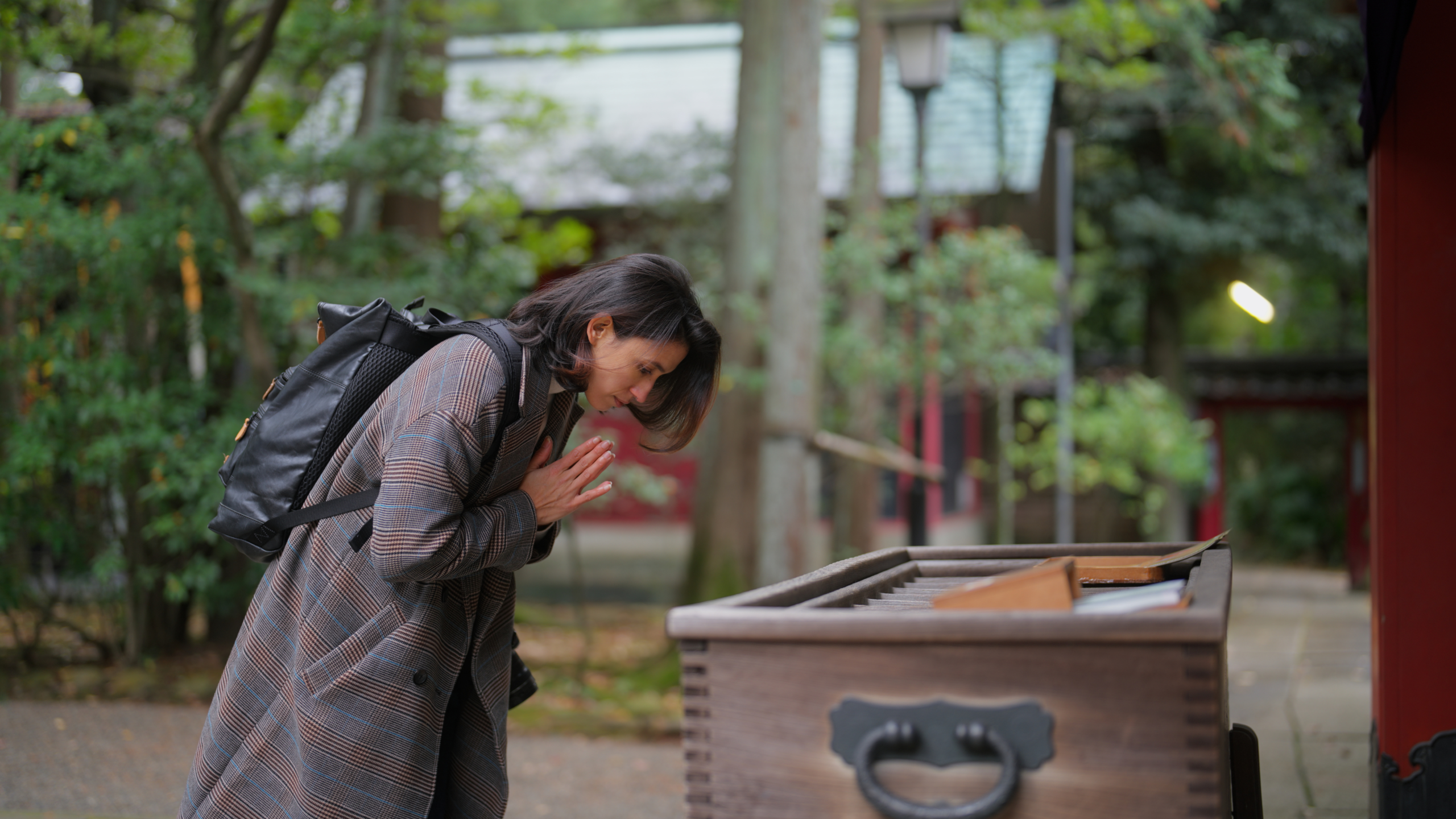
5. Perform the Prayer Ritual
The standard prayer method is:
- Bow deeply twice
- Clap your hands twice
- Silently make your wish or prayer
- Bow once more
This quiet sequence is the heart of the shrine visit—a moment of stillness and intention.
What to Do After Praying at a Shrine
Draw an Omikuji (Fortune)
Omikuji are random fortune slips:
- Keep good fortunes
- Tie bad ones to a rack or tree to leave the misfortune behind
Learn more: What is Omikuji
Get a Goshuin (Shrine Stamp)
A goshuin is a unique calligraphy stamp given at shrines and temples as proof of your visit. It’s written by hand with brush and ink, often including the shrine’s name and the date.
To receive one:
- Bring a goshuincho (stamp book), or buy one at the shrine
- Go to the designated office (shamusho)
- Pay a small fee (usually about 300–500 yen)
Unlike a simple souvenir, a goshuin is considered a sacred record of your visit.
Many travelers enjoy collecting them as a meaningful way to remember their journey through Japan.
Learn more: What is Goshuin?
Get an Omamori (Amulet)
Omamori are small protective charms for things like:
- Health
- Success
- Safe travel
- Love
They’re meaningful souvenirs you can carry with you.
Learn more: What is Omamori?
Write a Wish on an Ema
Ema are wooden plaques where you write wishes—about health, success, love, or travel—and hang them at the shrine.
Learn more: What is Ema?
Shrine Etiquette: What Not to Do
To keep the atmosphere respectful, avoid:
- Walking in the center of paths
- Taking photos where prohibited
- Eating or drinking in sacred areas
- Speaking loudly or disrupting others
- Touching sacred objects without permission
- Taking items that are meant to stay (like tied omikuji)
These small considerations make a big difference.
A Meaningful Shrine Experience in Japan
A visit to a shrine isn’t about getting every step perfectly right—it’s about being present in the moment.
By following these simple customs, you’re doing more than just observing Japanese culture. You’re quietly taking part in it, even if only for a short time.
Slow down as you walk through the grounds. Notice the sounds, the atmosphere, and the space around you.
Shrines are not just places to see—they are places to feel.
Whether you make a wish, receive a blessing, or simply pause in silence, your visit can become a small but meaningful connection to Japan’s spiritual life.

No responses yet