
What Is a Shinto Shrine?:A Simple Guide to Japan’s Sacred Spaces
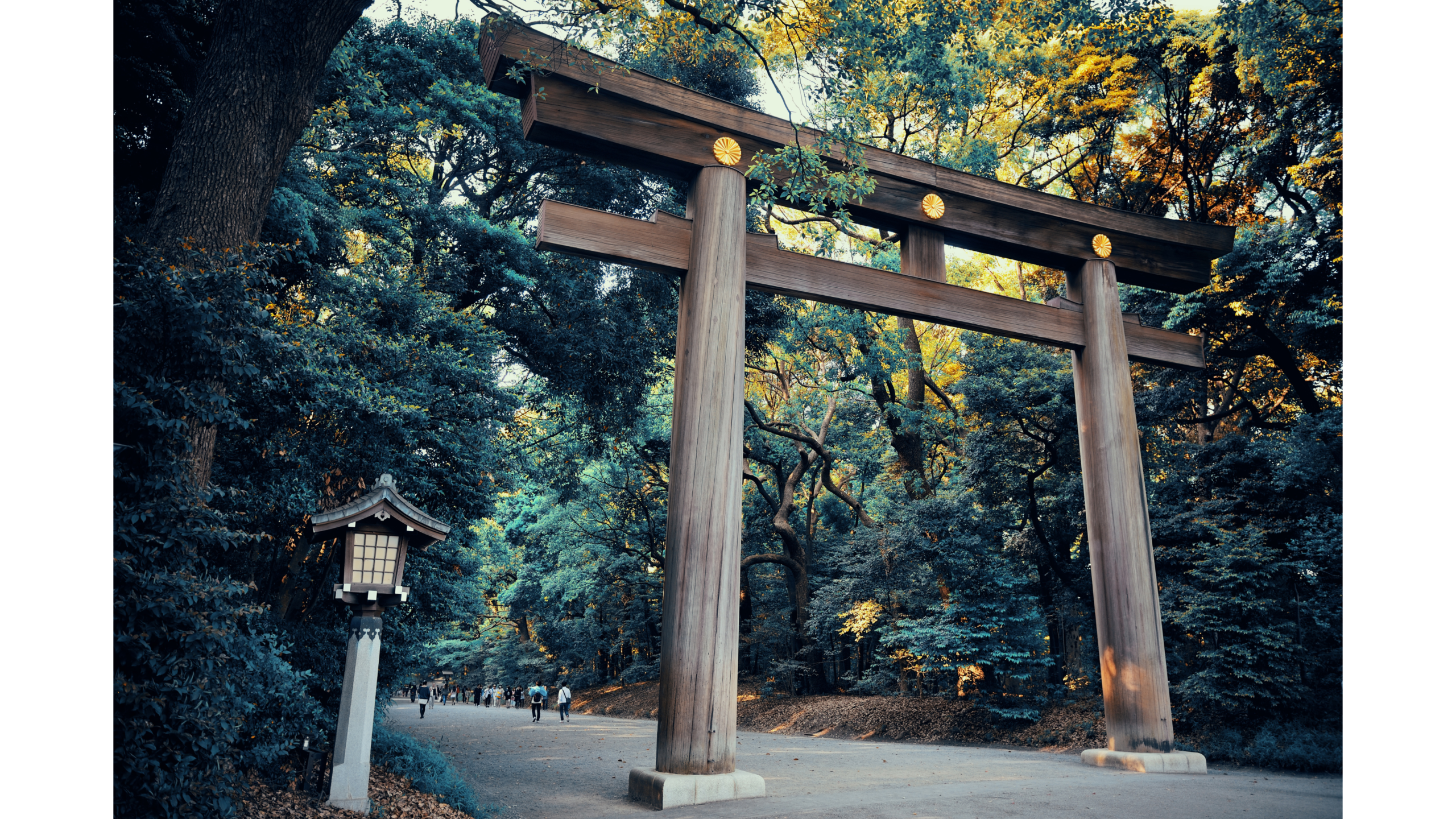
In Japan, you’ll often come across a quiet, open space marked by a simple gate.
It may be bright red. Or just natural wood.
You step through—and something changes.
This is a Shinto shrine.
But what exactly is it?
A Shrine Is a Space, Not Just a Place
A Shinto shrine (神社, jinja) is a sacred space where people connect with kami—the spiritual presences believed to exist in nature and life.
It is not a place for sermons or strict worship.
Instead, people visit shrines to:
- Pause and reflect
- Express gratitude
- Mark important moments
- Quietly make wishes
In other words, a shrine is less about “religion” and more about relationship and awareness.
What Makes a Shrine Different?
Unlike many religious buildings around the world, a shrine does not center on a single teaching or belief.
Instead, it creates a boundary between the everyday and the sacred.
You can feel this through its elements:
- A gate that marks the entrance → (Learn more: What Is a Torii Gate?)
- A place to cleanse yourself → (Learn more: What Is a Chozuya?)
- A hidden inner sanctuary → (Learn more: What Is the Honden?)
- A space where you offer a simple prayer → (Learn more: How to Pray at a Shrine)
Each part exists not just for function—but to shift your state of mind.
What Is Shinto?
Shrines are rooted in Shinto, Japan’s indigenous spiritual tradition.
Rather than a formal religion, Shinto is a way of seeing the world:
- Nature is alive
- The unseen is respected
- Purity and balance matter
Learn more: What Is Shinto?
Who Are the Kami?
At the heart of every shrine is a kami.
Kami are not exactly “gods.”
They are better understood as spiritual presences that exist in:
- Nature (mountains, rivers, trees)
- Ancestors
- Historical figures
In Japan, there is also a subtle cultural idea that even something as small as a grain of rice can hold a spirit. This reflects a deep-rooted sensitivity toward the presence of kami in everyday life.
Some kami are widely known across Japan.
For example, Amaterasu, the sun deity, appears in ancient Japanese mythology.
These stories come from early texts like the Kojiki, a collection of myths and origins that still shape shrine traditions today.
At the same time, many shrines enshrine local kami tied to a specific place or community—which is why each shrine feels unique.
Learn more: What Are Kami?
Shrines in Everyday Japanese Life
Shrines are not separate from daily life in Japan.
People visit them for:
- New Year prayers
- Life milestones
- Festivals (matsuri)
- Personal wishes
Even those who don’t consider themselves religious still visit.
Because a shrine is not about belief—it’s about participation in a shared cultural space.
So, What Is a Shinto Shrine?
A Shinto shrine is:
- A boundary between worlds
- A place to reset your mind
- A space to connect—with nature, with tradition, and with something unseen
It is not something you simply “understand.”
It is something you experience.

No responses yet